

Get To Know Your Raw
on Sep 12, 2026With so many different types of raw to pick from it can be difficult to know which one you should choose for your dog. Here is our breakdown on the different kinds of raw available and why you may choose to feed them.
Remember, every dog is an individual and their needs can change just like ours. Balance is achieved over time and variety is the key to a long and healthy life.
Complete – When we talk about complete raw dog food we are saying that it is nutritionally balanced for your dog, it will contain meat, bone and offal plus vegetables, minerals and vitamins as well as oils. A complete raw dog food is one of the easiest ways to feed your dog as the manufacture has done all the hard work for you. Nutritionally balanced and convenient to feed, complete raw dog food is definitely one of the most popular options available.
Reasons not to choose this option would be factors like if your dog has allergies or intolerances and you may need to remove elements from their complete raw diet, for example if your dog has yeast build-up and you would want to avoid starchy root vegetables.
Cost can also be a factor in choosing a complete raw food, depending on your budget, this option can sometimes be more expensive on a day to day basis than your dog’s previous kibble diet but the long term health benefits often outweigh the short term cost. Dog’s that experience digestive upset, irregular toilet habits and allergies that need regular medication from the vet, often find that once they switch to a fresh raw diet the veterinary costs reduce and their overall health improves.
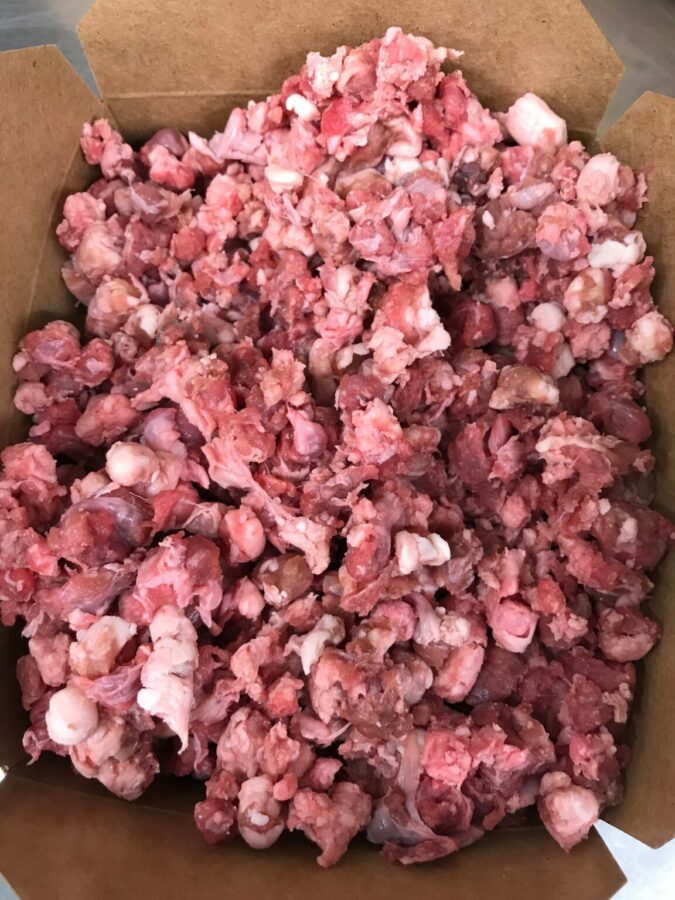
80/10/10 – You will hear this term a lot in the raw feeding community, 80/10/10 refers to the ratio of ingredients in a raw diet. 80% meat, 10% bone and 10% offal more importantly though it is vegetable free. This is a great option if your dog has sensitives or intolerances to particular ingredients and often a more economical choice for the price conscience pet parent.
Many manufactures offer an 80/10/10 range and it is often from as little as a few pence per day but remember not all raw is equal. Quality protein is key to a good raw diet, just because the label says “chicken” does not necessarily mean a good cut of meat so if the raw on offer seems cheap, ask yourself why. Discuss with your family what your daily budget would be and choose the manufacture that best suits.
80/10/10 can sometimes be lacking in essential nutrients when fed exclusively, our dogs are carnivores but until like cats they not obligate carnivores, meaning they eat meat but can also eat fruits and vegetables. in fact, dogs love fruits, nuts, seeds, and greens and we believe they should be fed to our dogs. If you choose to feed an 80/10/10 ensure you offer variety by feeding different proteins, ideally aiming for 5 different ones per week.
80/20 (No Offal) – This is a great option if your dog has a sensitive stomach, those with pancreatitis or prone to forming bladder stones as it contains no offal. Often low in purine and fat which makes it a great option for overweight dogs or if your dog has just been diagnosed with pancreatitis then this can be a great starting point.
Dog breeds with a purine metabolism problems like Dalmatians would also find this type of raw very beneficial as it reduces the risk of urate formation especially in the kidneys.
Mince – This is a great option if you’re are wanting to make your budget go a little further. Often used by DIY raw feeders as a starting point of a dog’s weekly menu, mince is generally (but not exclusively) minced carcass and can be with and without offal and have a high bone content. Carcasses are a cheap ingredient and as such are a great way to make up your own meals. Mix with a boneless mince, offal and veg or with another protein for a great cost effective raw diet.
This is a great option if you want to get hands on with your dog’s diet and are on a budget but the high bone content can be unsuitable for many dogs so we wouldn’t recommend this to a novice feeder.
Boneless – Available with and without vegetables, boneless minces are great if your dog is constipated or if they are having their raw meaty bone allowance separately. This option can be used as frequently or infrequently as you prefer as balanced is achieved overtime.
Single Protein – This is a very popular choice for pet parents who struggle with their dog’s digestive sensitivities, often available in Complete Raw and 80/10/10 types. Feeding your dog a single protein source is now so convenient and great for dogs that are on an exclusion diet.
If you are at the start of your dog’s raw journey and are just starting to eliminate potential food intolerances or you already know what you need to avoid feeding your dog, single protein options make it super easy to make better choices for our dogs. Even if your dog doesn’t have allergies this can still be a great choice. Variety is still key so even if your dog has allergies to chicken for example, there are still many other protein options available that he can have to ensure his diet is nourishing him nose to tail.

Chunks – Chunks of meat are great for offering texture to your dogs meal. These are normally diced muscle meat and are generally sold in 500g and 1kg packs. If your dog enjoys super chunky minces then using diced meat to add more texture is super easy. We would advice caution if you’ve never fed chunks of meat to your dog before though, if your dog has a tendency to not chew their food, cut them down into smaller pieces and build up to bigger chunks. This is the same for smaller dogs, the chunks can be mixed with their normal mince, dehydrated for a treat or used as part of their DIY diet. Either way these are a great way to keep your dog interested in their food in general.
Offal – Offal is a fantastic source of many of the important vitamins and minerals that help your dog stay strong and healthy. Vitamins A and B, D, E and K are all readily found in organ meat. The numerous benefits of these include healthy skin, eyes and a strong immune system. Offal also provides a plentiful supply of calcium, iron, and zinc – amongst many other important minerals, which help your pet maintain healthy teeth and bones, as well as supporting muscle growth and repair.
Tripe – Tripe is the edible stomach lining from domestic farm animals. Tripe can be sourced from any grass-fed animal.
Tripe is high in protein. This protein includes seven important amino acids, which perform several critical functions in your pet’s health – including building muscle, developing their immune system, and aiding digestive health. This, with the added benefits of high levels of calcium and phosphorus, means the green tripe offers a lot of health benefits for your dog.
Tripe is also high in levels of ‘good bacteria’. Specifically, the lactobacillus acidophilus – which helps to fend off any harmful bacteria that are present in your dog’s digestive tract. Topping up the levels of beneficial bacteria in your dog’s diet promotes healthy digestion, and minimises the risk of them experiencing an upset stomach.
The high levels of natural enzymes present in the tripe also help your dog to break down food more quickly and efficiently, making them better equipped to extract all the useable nutrients from their food.
Overall, despite the fact that it might not seem like a particularly appealing foodstuff, adding tripe to your dog’s diet actually offers some major benefits.
Whole Prey – Often for the more adventurous feeder, this is the most complete and balanced meal you can feed but certainly not for everyone. There are several possible advantages to choosing to feed your dog using whole prey animals. Firstly, they are surprisingly easy to source – lots of reputable pet food companies now supply whole prey animals, usually frozen, so you can easily store them at home and defrost them as and when you need.
A further advantage is that there is absolutely minimal wastage in a whole prey diet. The point of this approach is that it replicates the ancient diets of the wild ancestral dogs that our domestic pets are descended from. These wild canines would eat the entire animal; bones, skin, fur, feathers, blood, guts and all. By replicating this wild diet, your dog can get all of the protein and nutrients it needs from a variety of prey animals, with nothing going to waste. It’s also a considerably more environmentally-friendly option than purchasing highly processed tinned foods – or even grain-laden kibble.
By eating the whole animal, your dog can benefit from the complex proteins found in muscle meat, calcium from bones, and minerals such as iron from organs. Ultimately, it provides a balanced, healthy option for your dog’s diet.

Bones and Raw Treats – uncooked, edible bones like necks, wings and ribs are the corner stone of any raw diet but they can be daunting if you’ve never fed them before. Safety is always the most important thing when feeding any kind of bone. If you have a puppy or your dog has never had a raw bone before we recommend starting with something like chicken carcass or trachea which are soft and easy to digest, you could even hold it while your dog is eating to ensure they eat safely. Once you are more confident, you could then introduce things like duck wings, lamb ribs or whole gutted frozen fish.
It’s also important to remember that cartilage, skin and hide are a fantastic source of calcium, phosphorus and manganese. Manganese is often missing from raw food so we recommend offering your dog a variety of raw meaty bones to ensure they have the best possible health.
Bones are fantastic for oral hygiene and can be fed even if your dog is on a dry kibble diet.

